


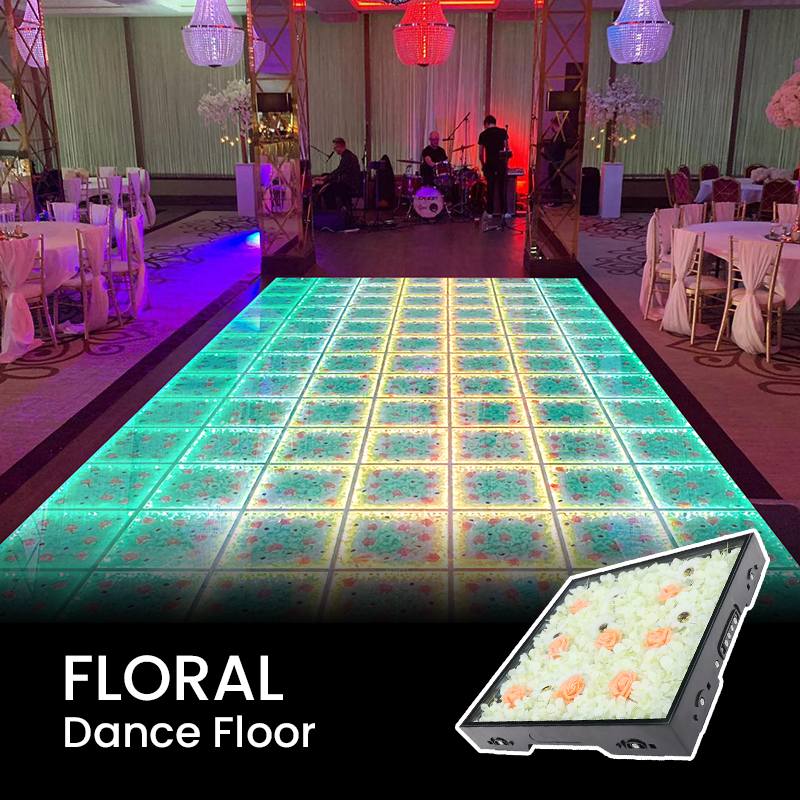


Dance floor lighting is the mix of lights under, above, and around the dance area that tells guests when to move. The best setups layer three sources: an LED dance floor that glows from below, overhead moving heads or wash lights that add motion, and perimeter uplighting that sets the room color. Sync all three, and the floor fills faster and stays full longer.
The 10 ideas below show how to build a look that sells itself, from a single LED floor to a fully synced club setup.

Why Dance Floor Lighting Makes or Breaks the Party
People dance where the light tells them to. A bright, moving floor creates a clear “stage” in the room, so guests know where the party is. When the floor stays dark, even a great DJ has to work twice as hard to pull people in.
Lighting is also one of the easiest upsells in event rental, because it is light to transport and clients see the value instantly in photos and video.
Strong lighting does three jobs at once:
Draws the crowd — a lit floor is a visual invitation to dance.
Builds energy — color changes and motion follow the music’s peaks.
Sells the next event — guests share clips, and your setup becomes free marketing.

Light From Below: 4 LED Dance Floor Ideas
The floor itself is your biggest light source. A modern led dance floor turns the whole dance area into a glowing canvas, and every guest walks through it. Whether clients call it a light up dance floor or an LED light dance floor, the four styles below cover most bookings.
Idea 1: 3D Infinity Mirror Floor for the “Wow” Moment
A 3D infinity floor uses mirrors and LEDs to create the illusion of a tunnel that drops away under your feet. It photographs beautifully and works for clubs, galas, auto shows, and corporate launches. Mix mirror and frosted panels to build a checkerboard look without extra hardware.

Idea 2: Pixel Patterns, Logos, and Monograms
A pixel floor lets you control each zone of the panel. That means hearts, stars, chases, text, or a brand logo on the floor, which puts a sponsor’s name into every corporate event photo. Effects can run from a DMX console, a computer, or a tablet.

Idea 3: Starlit Floors for Softer, Elegant Rooms
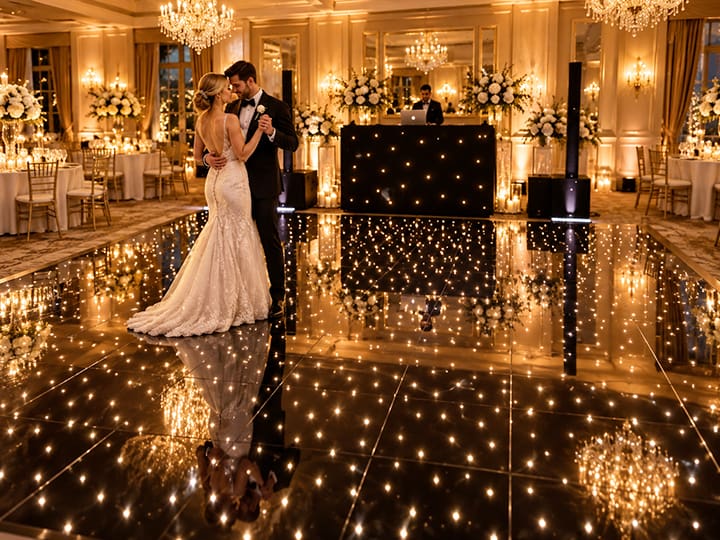
Not every event wants club energy. A starlight dance floor uses small twinkling points of light in a black or white acrylic surface. It suits banquets, galas, and late-night lounge areas where you want sparkle without heavy color.
Idea 4: Interactive and Video Floors That React to Guests
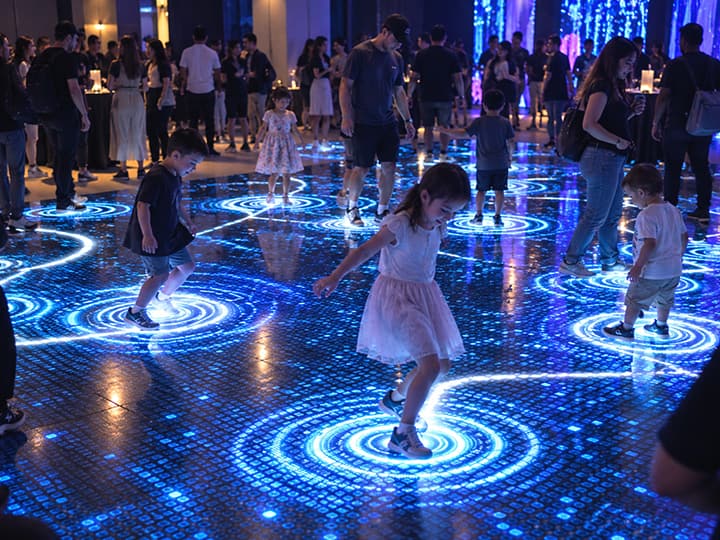
An interactive dance floor lights up under each step, so guests become part of the show. For full video, an LED display floor with a 3.91 mm or 4.81 mm pixel pitch plays clips and graphics, and a refresh rate of 1,920 Hz or more keeps footage flicker-free on phone cameras. Both work well for brand activations and kids’ parties.
Light From Above: 3 Ways to Use Overhead Dance Floor Lights
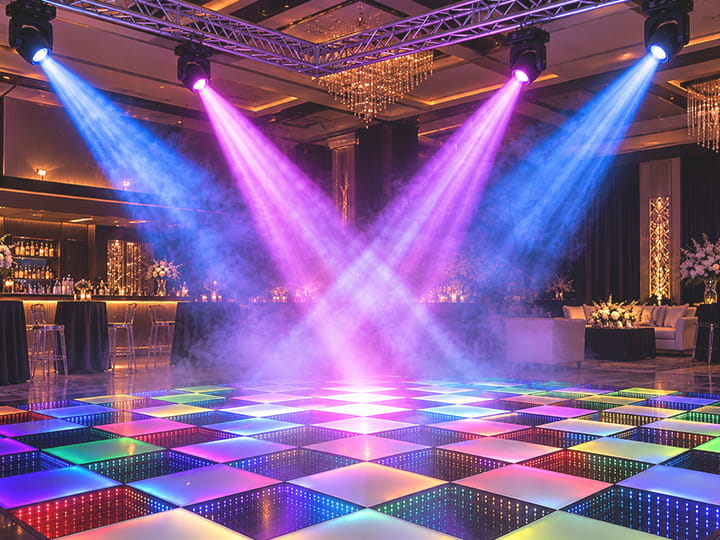
Floor light alone can look flat on camera. Overhead fixtures add motion, height, and drama, and they frame the crowd from every angle. Think of a dance floor with lights above and below as one picture, not two separate rigs.
Idea 5: Moving Heads for Beams and Big Drops
Moving heads are the backbone of DJ dance floor lighting: beam and BSW (beam, spot, wash) fixtures sweep the room and snap to the floor on a drop. One 3-in-1 BSW head can replace three separate fixtures, which saves truss space and setup time.
Aim two to four heads at the center of the floor, not at guests’ eyes. Add a gobo pattern on slow songs for texture without extra gear.
Idea 6: Wash Lights to Paint the Crowd
Wash fixtures cover the dancers in soft color, so faces look good in photos. Match the wash color to the floor, or use a contrast color, such as amber over a blue floor, to make people pop. This is the simplest form of intelligent lighting and the one most DJs underuse.

Idea 7: Lasers and Strobes for Peak Moments
Lasers and strobes are the classic disco floor lighting effects, but treat them as seasoning, not the main dish. Save them for the countdown, the bouquet toss, or the biggest drop of the night. Short bursts feel exciting; constant flashing feels tiring.

Dance Floor Lighting vs. Uplighting: Which Do You Need?
Uplighting and dance floor lighting solve different problems. Uplights sit on the floor along walls and wash them in color, setting the mood for the whole room. Floor-focused light pulls energy into the dance area itself.
| Factor | Dance floor lighting | Uplighting |
|---|---|---|
| Main job | Pull guests in and build energy | Set room color and mood |
| Where it goes | Under and above the dance area | Along walls, columns, and stage edges |
| Best moment | Open dancing, first dance, peak sets | Cocktail hour, dinner, speeches |
| Typical gear | LED dance floor, moving heads, wash, lasers | Battery LED uplights |
Idea 8: Use Both, Then Switch Scenes
The strongest events use both. Run warm uplighting during dinner with the floor on a soft static color. When dancing starts, dim the walls, switch the floor to a dynamic effect, and bring in the moving heads. Guests feel the shift without anyone touching a microphone.

Dance Floor Lighting Setups by Venue
Each venue needs a different balance of floor, overhead, and perimeter light. Use this as a starting point.
| Venue | Floor choice | Overhead | Perimeter | Watch out for |
|---|---|---|---|---|
| Nightclub | 3D mirror or pixel | Beams, lasers, strobes | Low | Spills, constant traffic |
| Stage or concert | Video or pixel | Moving heads, wash | Stage edges | Sightlines, camera flicker |
| Banquet or gala | Starlit or white panels | Soft wash | Warm uplights | Too much color |
| Outdoor or tent | Battery floor | Weatherproof heads | Battery uplights | Power and moisture |
Club dance floor lighting runs every night, so for a nightclub dance floor, durability matters as much as effects. Stage floor lighting faces a different test: cameras. For a stage dance floor, pick a refresh rate that keeps video smooth on broadcast and phone cameras.

Idea 9: Go Battery-Powered for Outdoor and Tent Events
Outdoor dance floor lighting often fails on power, not effects. A battery magnetic dance floor removes cables from the floor, and battery uplights do the same for the tent walls. TOP DANCE battery floors run more than eight hours on a four-hour charge.

Idea 10: Sync Everything Into One Dance Floor Lighting System
The final idea ties the other nine together: control the floor, overhead fixtures, and uplights from one DMX512 console. When every light follows the same cues, the room changes on the beat instead of looking random. It also keeps party lighting effects consistent from one event to the next.
A simple dance floor lighting setup plan:
Map the space. Mark the floor size, truss points, and power outlets on a floor plan.
Lay the floor first. Magnetic panels snap together, so one person can build the base quickly.
Patch DMX. Give the floor controller, heads, and uplights their own addresses.
Program three scenes. Dinner, open dancing, and peak moments cover most events.
Test with the DJ. Run one song per scene before guests arrive.
How TOP DANCE Helps You Build a Complete Floor-and-Light Package
One Factory, Floor to Truss
TOP DANCE has made LED dance floors since 2013 and builds stage lighting in the same 20,000 m² manufacturing base. You can source the floor, moving heads, wash lights, and uplights from one supplier, so colors and control protocols match out of the box.
Floors Built for Rental Turnover
Magnetic snap-on panels connect in about a second, and battery models remove cables entirely. Panels ship in flight cases for repeat-use rental fleets. Every floor supports DMX, computer, or remote control, so the dance floor LED lights fit the rig your DJs already run.
U.S. Stock, B2B Only
With 10+ U.S. warehouses in cities like Los Angeles, Chicago, and Florida, you avoid long ocean waits before peak season. TOP DANCE sells B2B only, so rental companies and distributors buy factory-direct without competing against the supplier for end clients. Products carry CE and RoHS certification, plus patents on the magnetic and battery floor systems.
FAQ: Lighting a Dance Floor the Right Way
What is the best dance floor lighting for a small venue?
An LED dance floor plus two wash lights is usually enough. The floor provides the main glow, and the wash lights make faces look good in photos. Add moving heads only if the ceiling height allows it.
How do you light a dance floor without a truss?
Use the floor itself as the main light source, then place battery uplights around the edge. Compact moving heads can also sit on tripod stands at the corners. This keeps setup fast in hotels and tents, and it is the most practical DIY dance floor lighting option.
What is the difference between dance floor lighting and uplighting?
It focuses on the dance area to build energy. Uplighting washes walls and columns to set the room mood. Most professional events use both and switch between scenes.
Can LED dance floor lights sync with the music?
Yes. Most dance floor LED lights offer sound-active modes, and DMX control lets the DJ or lighting tech trigger effects on cue. Syncing the floor with overhead lights gives the strongest result.
How long does a dance floor lighting setup take?
A magnetic LED floor and a basic overhead package can often be set up in under two hours by a small crew. Larger video floors and full truss rigs take longer. Always test every scene before guests arrive.
Conclusion: Build Your Look in Layers
A great look comes from layers, not from one expensive fixture. Start with an LED floor that glows from below, add overhead motion and color, frame the room with uplights, and tie it all together with DMX scenes. Match the mix to the venue, keep strobes brief, and plan power early.
Ready to build a dance floor lighting package your clients will rebook? Contact TOP DANCE for a floor-and-lighting quote shipped from U.S. stock.