
















Use an LED dance floor more than three or four times a year, and buying one almost always beats renting. That's the short answer for anyone weighing an LED dance floor for sale against another season of rentals. Run events for a living and the math gets better — a floor you own can be rented back out to your own clients, so it stops being a cost and starts paying you back. Renting feels easier up front. Over two or three seasons, it quietly drains more cash than a one-time purchase ever would.
This guide breaks down the real numbers behind buying versus renting, the hidden costs renters rarely add up, and how a purchased floor can pay for itself.
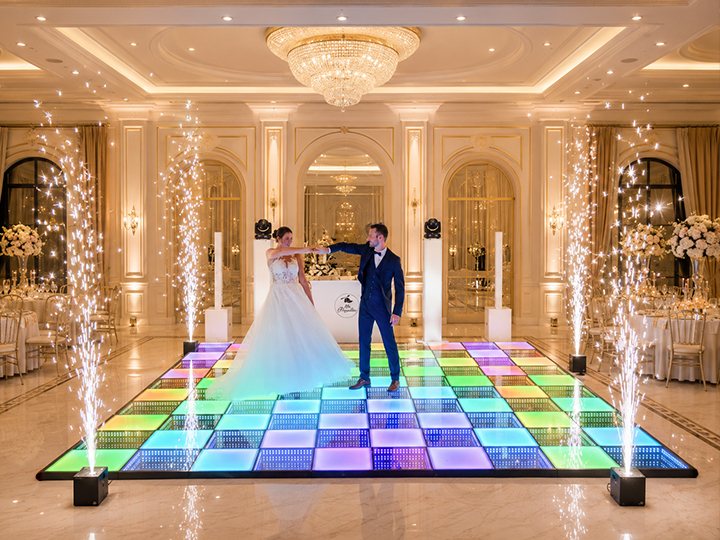
How LED Dance Floor Rental Actually Costs You More
Renting looks cheap on a single invoice. The problem is what that invoice doesn't show.
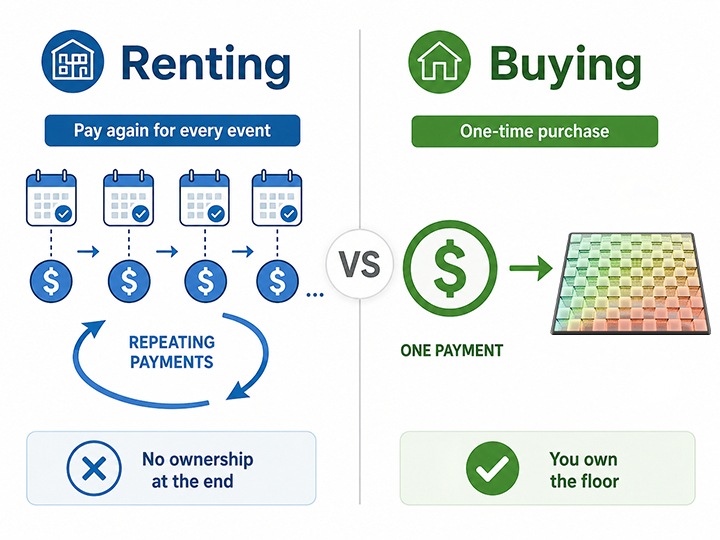
Every rental payment buys you one night and leaves you with nothing. Industry pricing guides put a led dance floor rental at roughly $1,000 to $6,000 per event, with a 20×20 ft floor averaging around $3,800 in 2026. Searches for dance floors rental and party dance floors rental run into the tens of thousands every month, so the demand — and the per-night price — is real. Book three or four events a year and you've spent more than the floor would have cost to own outright. Nothing to show for it afterward.
Then there's availability. Peak wedding and holiday dates sell out fast, and the unit you wanted is often gone when your client needs it most. So you scramble. You grab a substitute or turn down the booking. Companies that list dance floors for hire also hand you whatever's on the shelf, so panel quality, brightness, and color can drift from one event to the next — and that inconsistency is hard to explain to a paying customer.
You can't brand a rented floor. You can't customize its size. And you renegotiate delivery and pickup every single time. For anyone running more than a handful of events a year, renting is the most expensive way to keep a floor on the calendar.
What You Get the Day You Own It
The moment you own your floor, the calendar stops controlling you. No availability checks. No deposit. No waiting on a warehouse.
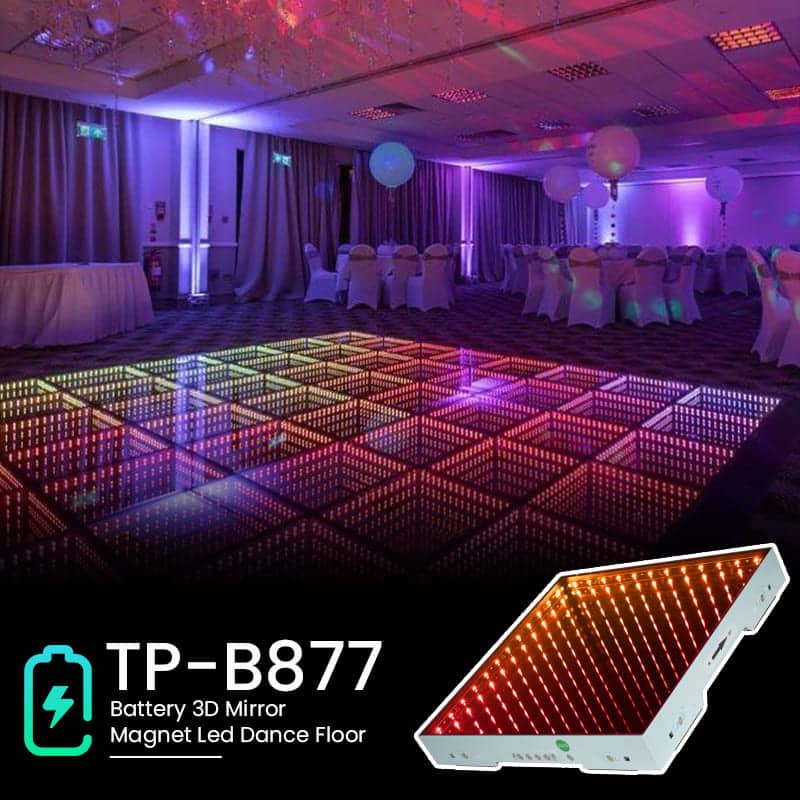
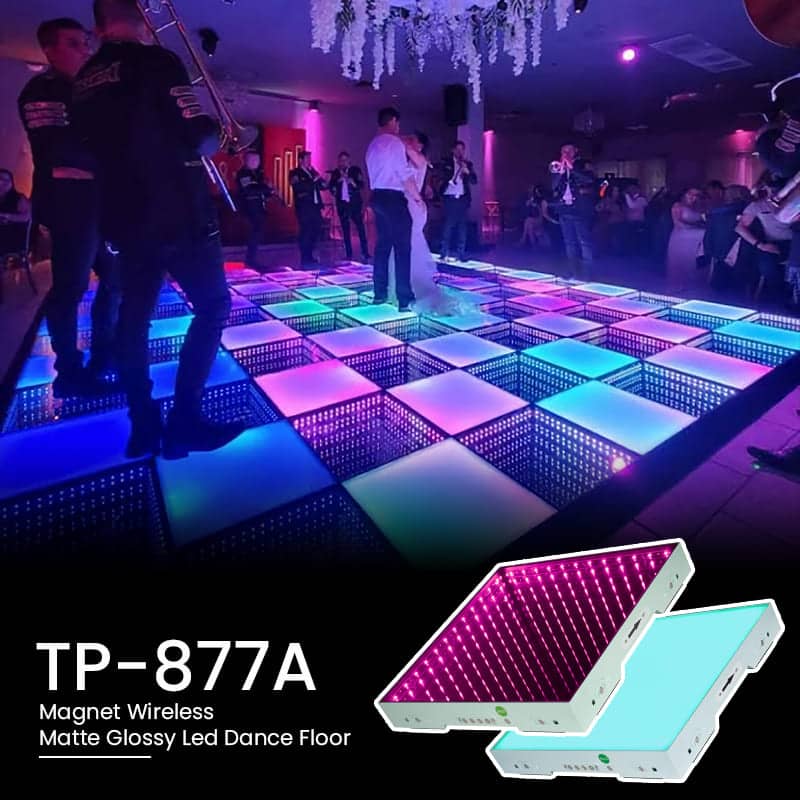
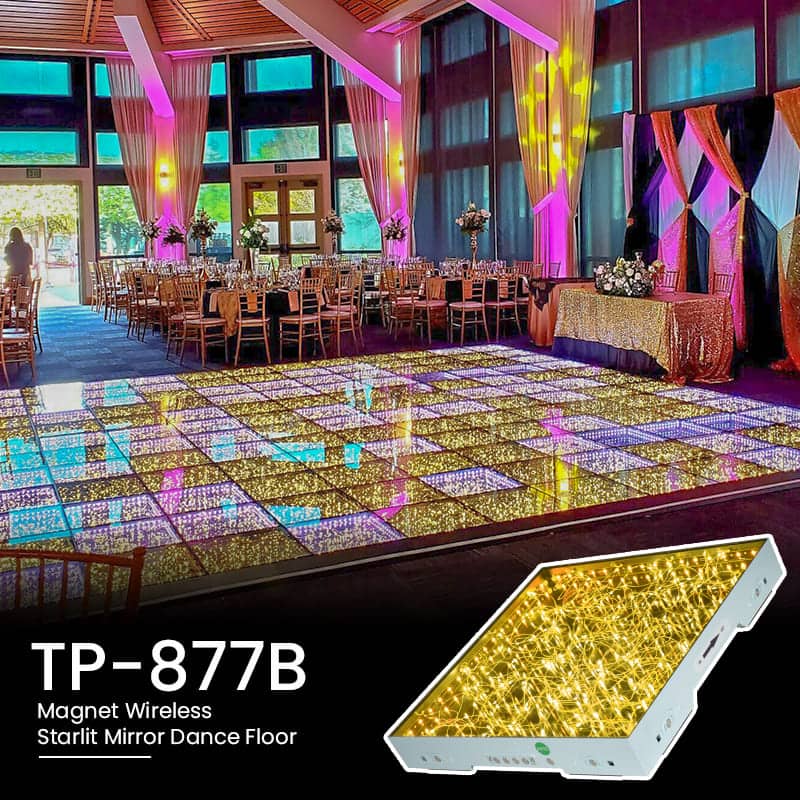
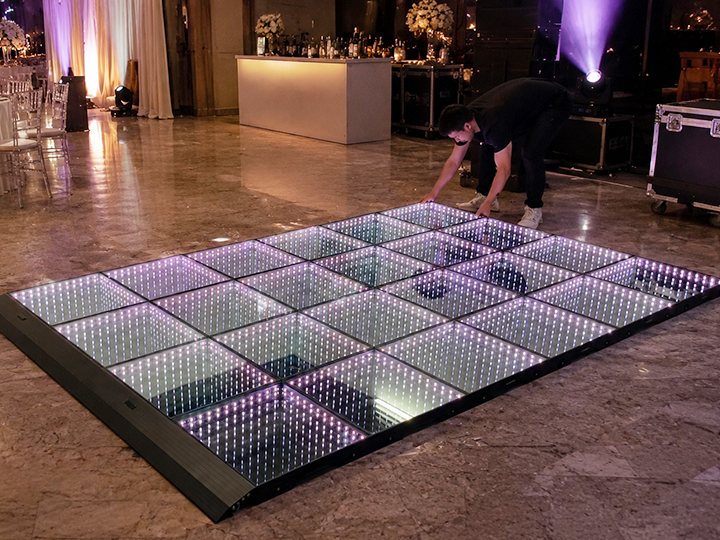
You set up whenever you want, with the same trusted equipment every time — so the brightness, color, and finish your client saw in your portfolio are exactly what shows up on event day. Whether you own a fixed installation or portable dance floors you move between venues, the look stays yours to control. Need a specific size? You spec it once and it's yours. Want a checkerboard layout, a 3D infinity look, or your logo on the panels? That's a one-time decision, not a per-event upcharge.
Modern floors make ownership painless to handle, too. TOP DANCE panels use a magnetic snap-together system that lets one person assemble a 20×20 ft floor in minutes, no tools required. Buy a led dance floor for sale today and the control is entirely yours from the first event onward.
Turn an Owned Floor Into a Revenue Stream
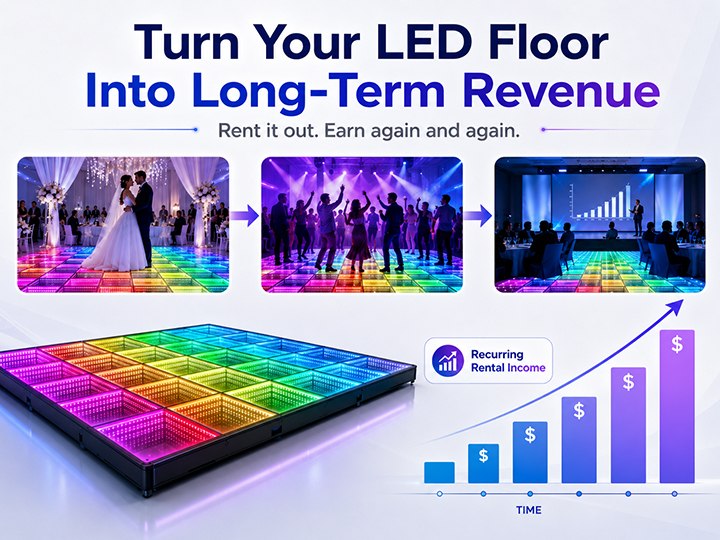
Here's the part renters never get to enjoy. When you own a floor, you can rent it out.
Buy one for your own venue or events, and on the nights you're not using it, sub-rent it to other planners, couples, or local businesses. This is why so many operators shop dance floors for sale rather than book another rental — an owned floor earns. With rental rates commonly running $1,000 to $5,000 per event depending on size, a floor that cost a few thousand dollars to buy can recover a large chunk of its price in a single busy season. After that, every rental is close to pure profit.
The model works across the board. Wedding planners upsell a premium wedding dance floor at a higher margin. Venues add a lighted dance floor line item to every booking. Event rental companies build a fleet, because owned inventory is the whole business. A floor you buy is one of the few event assets that pays for itself and then keeps earning.
A floor you rent is an expense that ends at midnight. A floor you own is an asset that works every weekend you let it.
Buy vs Rent LED Dance Floor: The 3-Year Cost Breakdown
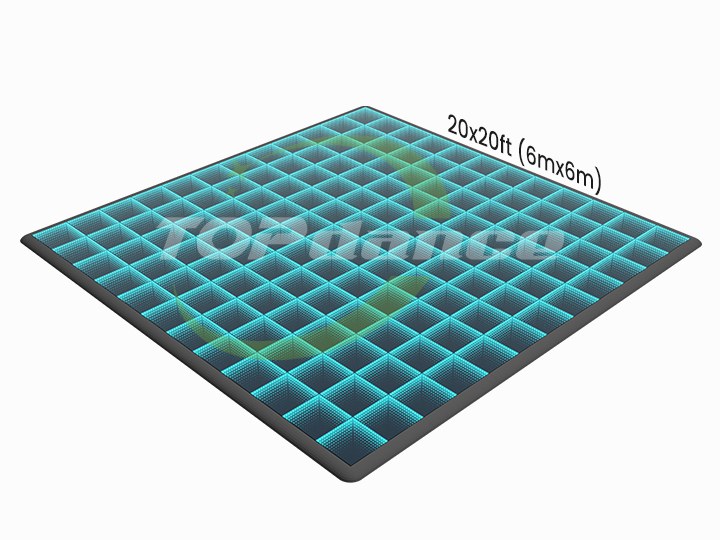
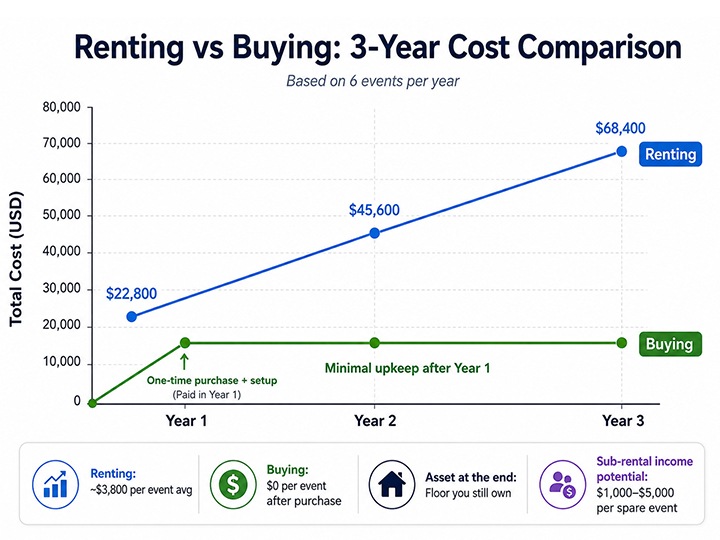
Numbers settle the debate. Here's a comparison for a 20×20 ft floor used about six times a year, using 2026 US market ranges. Rental rates come from published pricing guides; purchase prices reflect typical factory-direct ranges for this size.
| Renting | Buying | |
|---|---|---|
| Cost per event | ~$3,800 avg | $0 (after purchase) |
| Year 1 (6 events) | ~$22,800 | One-time purchase + setup |
| 3-year total (18 events) | ~$68,400 | Purchase price + minimal upkeep |
| Asset at the end | None | Floor you still own |
| Sub-rental income potential | None | $1,000–$5,000 per spare event |
The crossover usually lands in the first year. Pass three or four events and the rental column races ahead for good. Buying also caps your cost — one known number, not an open-ended bill that grows with every booking.
And renting hides extras: repeat delivery fees, peak-season surcharges, and the bookings you lose when nothing's available. Owning erases all three.
What to Look For When You Buy Dance Flooring
Buying well means matching the floor to how you work. When you shop for dance flooring to own, a few decisions matter most. Our LED dance floor buying guide digs deeper into each.
Size comes first. Measure your typical guest count and venue, then size the floor so dancers have room without swallowing the space.
Connection type is next: magnetic snap-together panels install faster than wired systems and survive repeat transport better.
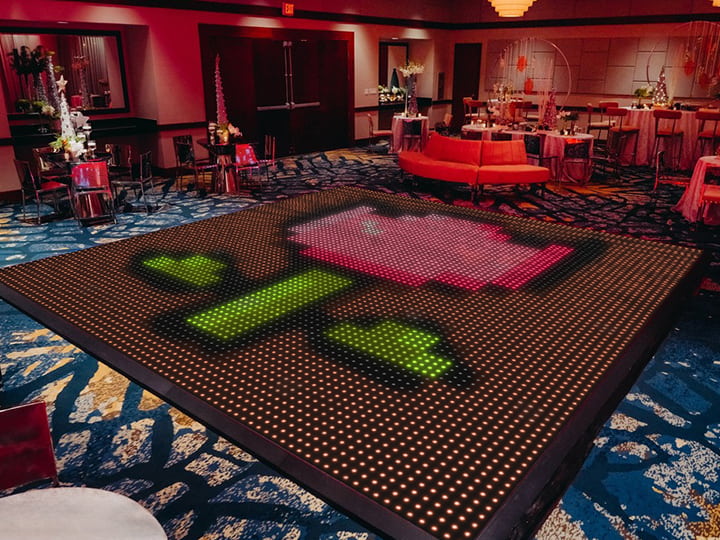
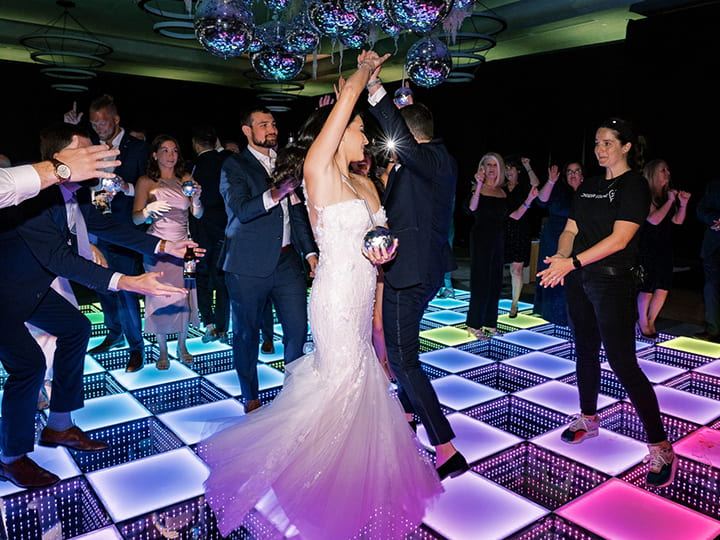
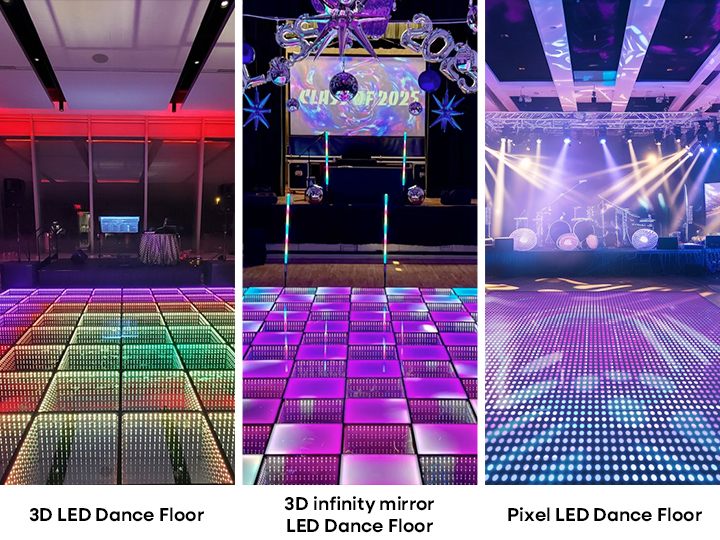
Style depends on your market — 3D infinity and mirror finishes wow wedding crowds, while pixel and video floors suit clubs.
Don't overlook the led dance floor panel specs. Build quality, load rating, and waterproofing decide how the floor looks on night fifty, not just night one. A spill-resistant, commercial-grade panel keeps earning; a thin consumer tile cracks and fades.
Why Buy Your LED Dance Floor From TOP DANCE
Factory-Direct Pricing, No Middleman
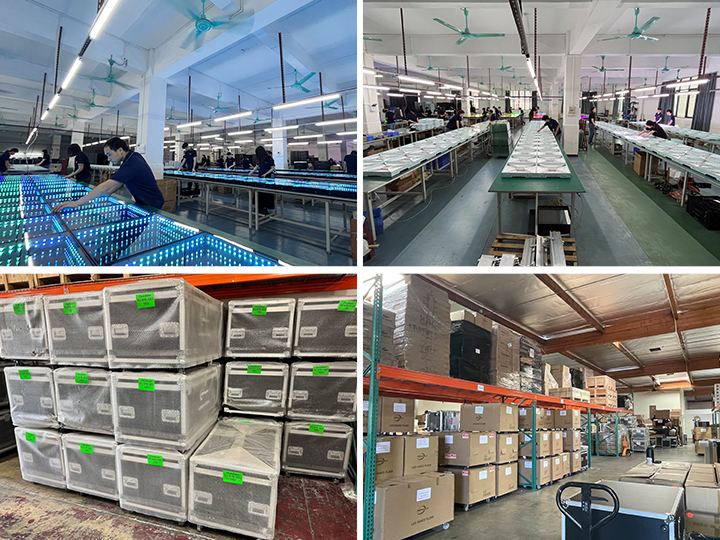
TOP DANCE builds every floor in a 20,000-square-meter factory with 500+ workers, so you buy at the source and skip the distributor markup that inflates most quotes.
US Warehouses, 3-Day Delivery, Zero Tariffs
With a local dance floor warehouse in Los Angeles, Chicago, Florida, and 10+ US sites, most orders ship domestically and arrive in about three business days — no six-week ocean wait, no surprise customs bill.
3-Year Warranty on Every LED Dance Floor Panel
Every floor carries a 3-year warranty covering each panel, the power, and the control system. Need a custom size, finish, or branded layout? Our engineers build it to spec at factory pricing.
Built to Be Rented Out
Magnetic snap-together assembly, CE and RoHS certification, and rugged commercial panels mean your floor holds up to repeat events — exactly what you need if you plan to sub-rent and earn.
Frequently Asked Questions
Is it cheaper to buy or rent an LED dance floor?
For occasional one-off events, renting can be cheaper. But once you use one more than three or four times a year, buying wins — and the gap widens every event after that. Owners also avoid peak-season surcharges and repeat delivery fees.
How much does a light up dance floor cost to buy?
Prices depend on size, style, and panel quality. Factory-direct sales from a manufacturer like TOP DANCE typically cost less per square foot than retail, and a single floor often costs about the same as three to six rentals. Buying new also avoids the reliability risks of a used floor with unknown hours on it.
Can I rent out an LED dance floor I bought to make money?
Yes. With rental rates commonly running $1,000–$5,000 per event by size, owners who sub-rent on free nights can recover much of the purchase price in one busy season. After that, rental income is largely profit.
How long does a purchased LED dance floor last?
A commercial-grade floor is built for tens of thousands of hours of use. With quality panels and a 3-year warranty, an owned unit reliably serves years of repeat events before any meaningful brightness loss.
What size should I buy?
Match the size to your typical guest count — roughly 4.5 square feet per couple dancing. A 20×20 ft floor suits most weddings and mid-size events, and magnetic systems let you scale up or down by adding or removing panels.
Conclusion
Renting is the easy choice for a single event. Owning one is the smart choice for a business. The decision comes down to three things: how often you'll use it, whether you want a cost that ends or an asset that earns, and how much control you need over quality and branding.
Run the numbers on your own event count. If you're past the three-or-four-events line — or you've ever wished you could rent your floor out instead of renting one in — it's time to own. Talk to TOP DANCE about a factory-direct floor built to use, and to earn.